01Why am I not losing weight on tirzepatide?
Liquid calories and short sleep can quietly hold the scale level; your clinician times each step with you.
30-second answers to the questions patients actually ask, organized by medication. For education only. Talk to your clinician before changing anything.
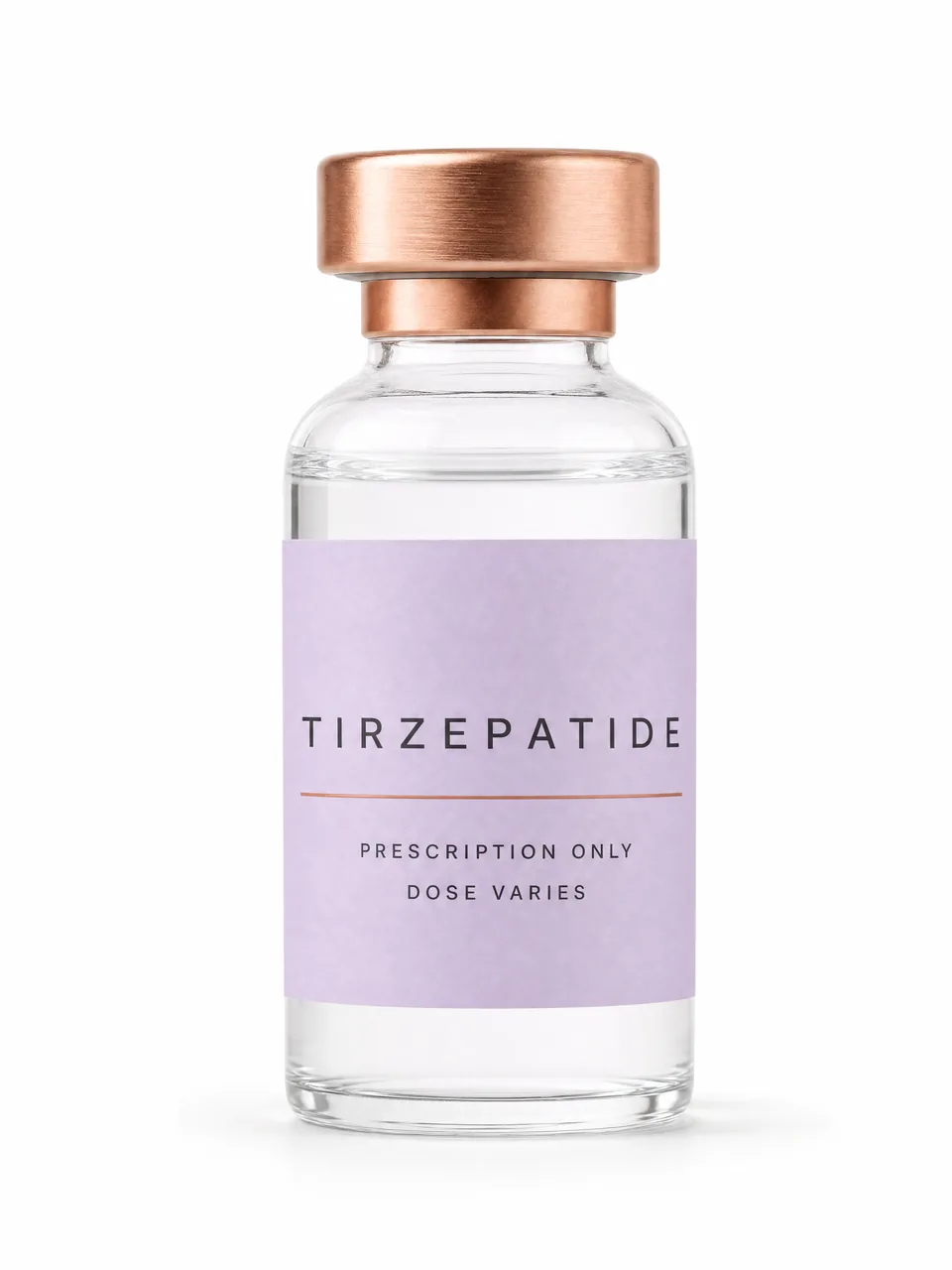
Compounded tirzepatide is a dual GIP/GLP-1 medication prepared to order by licensed U.S. compounding pharmacies. It is not FDA-approved. Trial results such as SURMOUNT-1, reported in NEJM, apply to the FDA-approved brand Zepbound®. A licensed clinician reviews your history and decides whether treatment is appropriate.
Two hormones, one molecule, and up to 22% average weight loss in landmark large clinical trials of this drug class - the whole story, in 30 seconds.
Compounded tirzepatide is not FDA approved. Individual results vary. Prescription only - a licensed clinician determines eligibility. For education, not medical advice.
Liquid calories and short sleep can quietly hold the scale level; your clinician times each step with you.
The difference: it activates two gut-hormone receptors instead of one. Which is right for you is personal.
Appetite often softens within days and food noise goes quiet; mild nausea can visit as the stomach slows. The scale usually does not move yet - and that is normal.
It imitates two gut hormones at once - GLP-1 and GIP. GLP-1 slows the stomach, steadies insulin and signals fullness; GIP amplifies the effect. That second receptor is the difference from semaglutide.
Three clocks: appetite quiets within a week or two, the scale moves within the first month or two, and the full effect takes months.
It goes into the subcutaneous fat layer - a slow-release harbor with sparse capillaries, unlike fast-flowing muscle. The medicine pools as a depot, then trickles into capillaries and lymphatics all week. Belly, thigh or upper arm all offer this cushion; rotate weekly.
Refrigerate at 36-46 F. Freezing ruins it; so do heat and direct sun. Travel with an insulated pouch and ice pack in your carry-on. Frozen, cooked or cloudy vials - ask your pharmacist first.
Hair loss is listed as a common side effect on FDA-approved product labels. Losing weight quickly can cause temporary shedding on its own, so raise it with your clinician rather than assuming which one it is.
It can early on - usually the calorie deficit, dehydration and low electrolytes rather than the drug. Water, salt, protein at every meal and real sleep fix most of it within weeks.
Sulfur burps, constipation and early headaches - all downstream of a slower stomach and eating less than you realize. Most fade with adaptation. Severe pain, relentless vomiting or dehydration: call your clinician.
In any rapid loss, some of what goes is lean muscle - unless you defend it with protein at every meal and resistance training twice a week or more. The scale measures weight; strength lives in the muscle you keep.
The appetite it quieted usually returns. Stopping deserves a maintenance plan made before the last dose, not after.
Tirzepatide is the molecule. Brand-name products built on it are approved medicines made by their manufacturer; other brands use a different molecule entirely. Compounded tirzepatide is not a brand, not a generic, and is not FDA-approved - it is a compounded formulation prepared by a licensed compounding pharmacy on a patient-specific prescription when there is a clinical need and an fda approved tirzepatide option is not clinically appropriate for the individual, and a clinician should evaluate whether a compounded option fits that person's clinical situation.
Yes, now it does. PinwellRx offers a compounded oral tirzepatide tablet prepared by a licensed US pharmacy against your prescription (compounded medications are not FDA-approved), and FDA-approved GLP-1 tablets exist as well. Ask your clinician which route fits you.
Retatrutide adds a third receptor - glucagon - turning up energy burn. It remains experimental and unapproved, in phase-three trials.
Compounded vials are shipped cold and belong in the refrigerator. Your pharmacy label is the authority on how long yours may sit at room temperature and when to discard it. If a vial gets warm, cloudy or is past its discard date, do not use it - call the pharmacy on the label.
Compounded medications are paid out of pocket; insurance does not cover them. Pricing varies across compounding pharmacies and depends on the concentration prescribed and the number of vials. PinwellRx shows the price before you pay, and compounded versions differ from FDA-approved medicines in approval status, and you are refunded in full if a clinician does not prescribe.
Compounded vials ship cold and belong in the refrigerator. Your pharmacy label is the authority on how long yours may sit at room temperature and when to discard it. If a vial gets warm, cloudy, or is past its discard date, do not use it - call the pharmacy on the label.
Every therapy we offer has its own film library, same format, same honesty.


A licensed clinician reviews every intake. You’ll see your price before you pay, and nothing ships unless a clinician prescribes it.