01What is glutathione?
A molecule your own body makes - three amino acids joined into one antioxidant that lives in nearly every cell, densest in the liver. Levels fall with age, stress and illness.
30-second answers to the questions patients actually ask, organized by medication. For education only. Talk to your clinician before changing anything.
Glutathione is the body’s primary antioxidant, built in your own cells from three amino acids and used to neutralize oxidative stress. Compounded glutathione injections are prepared by licensed U.S. pharmacies and are not FDA-approved. A licensed clinician reviews your health history and decides whether it is appropriate for you.
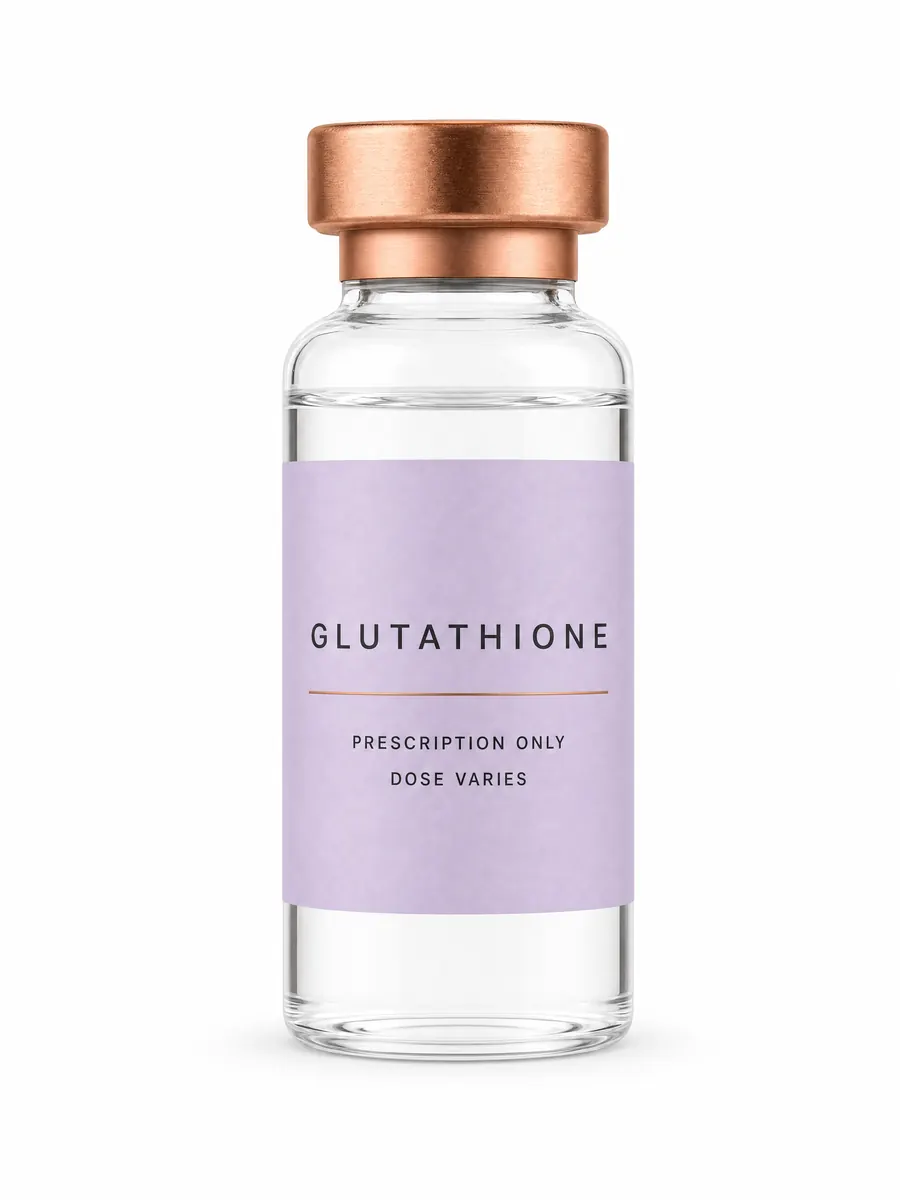
A molecule your own body makes - three amino acids joined into one antioxidant that lives in nearly every cell, densest in the liver. Levels fall with age, stress and illness.
Three jobs, constantly: it neutralizes free radicals, helps the liver bind and escort waste out - real, biological detoxification - and supports immune cells that depend on it. Maintenance for the machinery everything else runs on.
Injections reliably raise blood levels - that part is measurable. Outcome evidence is thinner: small studies suggest effects on skin tone and oxidative stress, but large long-term trials have not been done. Real biology, modest expectations.
Generally well tolerated. Side effects are usually small - injection-site soreness, occasional cramping or mild nausea. Cautions: people with asthma can be more sensitive, and long-term high-dose data is limited. Screening first; a clinician throughout.
There is real biology - it can nudge pigment production toward a lighter form - but study effects were modest, gradual, and faded when supplementation stopped. High-dose long-term use for skin tone is not well studied.
Swallowed glutathione is largely broken down in digestion - blood levels barely move for most people. Injections bypass the gut, delivering the intact molecule reliably. IV delivers the most, fastest, but peaks, fades and costs more per session. Route matters as much as dose.
No universal number. Injection protocols typically run one to three times weekly, with dose set by your clinician and your pharmacy’s concentration - the same milligrams can be a different line on a different syringe. Your schedule lives on your label.
Three clocks: blood levels rise within hours, cellular reserves rebuild over weeks of consistent use, and the subtle things people notice - skin tone, recovery, resilience - live on the slowest clock: months, not days.
The things that drain it: alcohol (the liver spends glutathione on every drink), smoking, and chronic sleep loss. Acetaminophen (Tylenol) also consumes it as the liver clears the drug - in overdose, the rescue medicine is NAC, a glutathione precursor.
Yes - the body builds it from parts you supply. Sulfur-rich foods (broccoli, garlic, onions, asparagus, avocado, eggs, lean protein) are the raw material; real sleep and regular exercise multiply production. Slower than injections - but yours to keep.
The best time is the one you keep. Capsules: some prefer away from meals, with food is fine. Injections only care about the calendar - same days, same ritual, week after week.
Two valid roads: subcutaneous (belly or thigh fat - gentler, easy at home) or intramuscular (shoulder or outer thigh - slightly faster to blood). Your prescription specifies which. Rotate sites and let the vial warm first.
Typically one to three weekly, in courses of several weeks to a few months, then reassess. Stopping brings no crash - levels ease back toward your own baseline over weeks, because your cells never stopped making their own.
A brief sting is chemistry, not harm - the concentrated solution differs slightly from tissue pH, and nerves notice for a few seconds. Room-temperature vial, slow push, press-don’t-rub. Redness lasting beyond a day: call your clinician.
Every therapy we offer has its own film library, same format, same honesty.
A licensed clinician reviews every intake. You’ll see your price before you pay, and nothing ships unless a clinician prescribes it.