30-second answers to the questions patients actually ask, organized by medication. For education only. Talk to your clinician before changing anything.
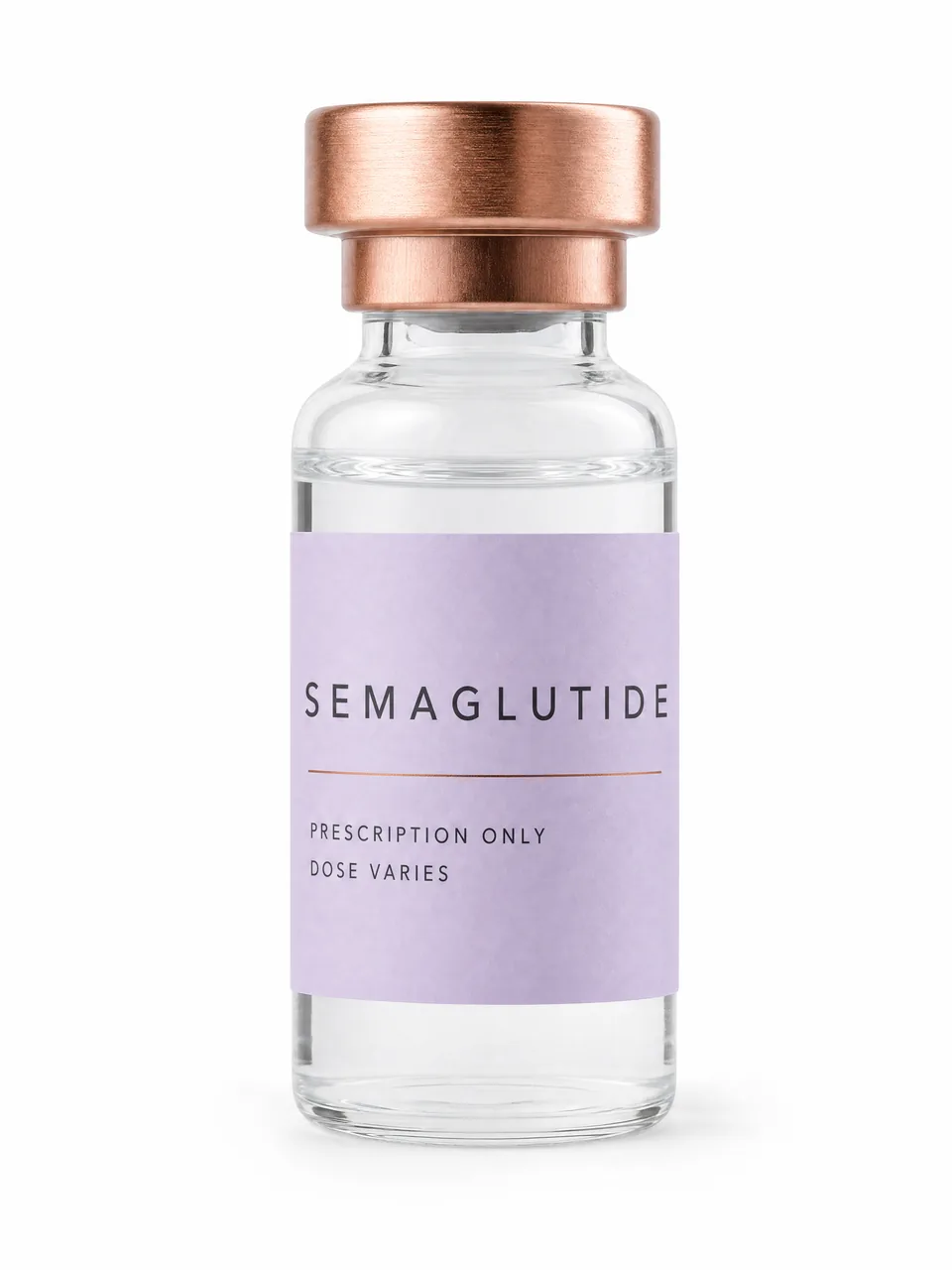
Compounded semaglutide is a GLP-1 medication prepared to order by licensed U.S. compounding pharmacies. It is not FDA-approved. According to the FDA prescribing information for Wegovy®, semaglutide works by supporting appetite regulation. A licensed clinician reviews your health history and decides whether it is appropriate for you.
Sources: FDA prescribing information, peer-reviewed clinical trials and NIH literature · Updated August 2026
Licensed cliniciansRefund if not prescribedCancel anytime503A U.S. pharmacies
One hormone your gut already makes, and roughly 15% average weight loss in landmark large clinical trials of this drug class - the whole story, in 30 seconds.
Sixty seconds on semaglutide
1:00
Compounded semaglutide is not FDA approved. Individual results vary. Prescription only - a licensed clinician determines eligibility. For education, not medical advice.
Semaglutide
Compounded GLP-1 - weight loss and metabolic
01What is semaglutide?
A medicine that imitates GLP-1, the gut hormone released after eating. Given weekly by injection, it signals fullness, slows the stomach, and steadies blood sugar - the molecule inside approved brand-name medicines for diabetes and weight management.
Plays on YouTube
02How does semaglutide work?
It binds the same receptor as your own GLP-1 - engineered to last a week instead of minutes. The stomach empties slower, insulin timing improves, and the brain’s food noise goes quiet. One signal, three effects.
Plays on YouTube
03What does semaglutide actually do?
Four things at once: quiets appetite, slows the stomach, steadies blood sugar, and in large trials lowered heart-attack and stroke risk in people with heart disease. Weight trials averaged about fifteen percent body-weight loss.
Plays on YouTube
04How does it work for weight loss?
Not by burning fat directly - by changing the input. Appetite quiets and smaller meals satisfy, so a steady daily calorie deficit builds without the willpower war. The loss follows the math.
Plays on YouTube
05How long until it suppresses appetite?
Often within the first few days - meals end earlier, food noise quiets. The effect deepens over the first weeks and strengthens as doses step up. No change after several weeks? Tell your clinician.
Plays on YouTube
06How long does it take to work?
Three clocks: appetite in days, the scale in four to eight weeks, the full effect over a year as doses climb - around fifteen percent of body weight in the major trials.
Plays on YouTube
07Is semaglutide safe?
Studied in tens of thousands of people over years - for most, yes, under medical supervision. Common: nausea, constipation, easing with adaptation. Rare but serious: pancreatitis, gallbladder disease. Not prescribed with a personal or family history of medullary thyroid cancer.
Plays on YouTube
08How long do side effects last?
Nausea peaks in the first days after a dose - especially a higher one - and settles within weeks. Each step up brings a smaller echo. Severe or constant after a month? Call your clinician.
Plays on YouTube
09Does it cause hair loss?
Hair loss is listed as a common side effect on the FDA-approved labels. Losing weight quickly can cause temporary shedding on its own, so raise it with your clinician rather than assuming which one it is.
Plays on YouTube
10Does it make you tired?
Early on it can - usually the calorie deficit and quiet dehydration, not the drug. Water, electrolytes, protein at every meal, and real sleep bring energy back within weeks for most.
Plays on YouTube
11Where should you inject it?
Belly (two inches from the navel), front of thigh, or back of the upper arm - absorption is similar at all three. Rotate to a new spot each week to keep skin healthy.
Plays on YouTube
12What is compounded semaglutide?
The same active molecule, prepared by a state-licensed compounding pharmacy as a patient-specific prescription - usually vial and syringe instead of a pen. Compounded medications are not FDA-approved; the pharmacy behind your vial is everything.
Plays on YouTube
13Is compounded semaglutide safe?
Compounded medications are not FDA-approved - safety rests on the pharmacy. Licensed compounding pharmacies work under state regulation and testing; gray-market vials carry unknown purity and dose. Prescription and clinician, always.
Plays on YouTube
14Semaglutide vs tirzepatide - what’s the difference?
Both imitate GLP-1; tirzepatide adds a second hormone signal, GIP - one key versus two. Both drive real weight loss; tirzepatide averaged more in trials, but response, side effects, and cost differ person to person.
Plays on YouTube
15Is tirzepatide better than semaglutide?
On average, yes - the head-to-head weight trial showed about twenty percent loss versus fourteen. But averages hide people: many respond strongly to semaglutide, which also carries longer heart-protection evidence.
Plays on YouTube
16Which is better for you - how to choose?
Five questions decide it: how your body responds, which side effects you can live with, budget and coverage, your medical history, and reliable availability. The best medication is the one you can stay on - decide with a clinician.
Plays on YouTube
17Does it expire?
Yes, twice: the printed expiration date, and a shorter in-use clock - brand pens about eight weeks, compounded vials per the pharmacy’s beyond-use date. Cloudy or discolored liquid: don’t use it.
Plays on YouTube
18Does it need to be refrigerated?
Yes - 36 to 46 F before first use. In-use brand pens tolerate room temperature for weeks; compounded vials usually stay refrigerated - follow your pharmacy label. Never freeze. Travel with an insulated pouch in your carry-on.
Plays on YouTube
Keep exploring
Questions on the other medications
Every therapy we offer has its own film library, same format, same honesty.
These films are educational drug-class content, not medical advice and not an offer of treatment. Compounded medications are not FDA-approved. Individual results vary. Always consult a licensed clinician.
Trial results and label statements belong to the cited FDA-approved products and publications - they are not claims about compounded medications. Compounded medications are not FDA-approved.