
Design the sequence, not the intention
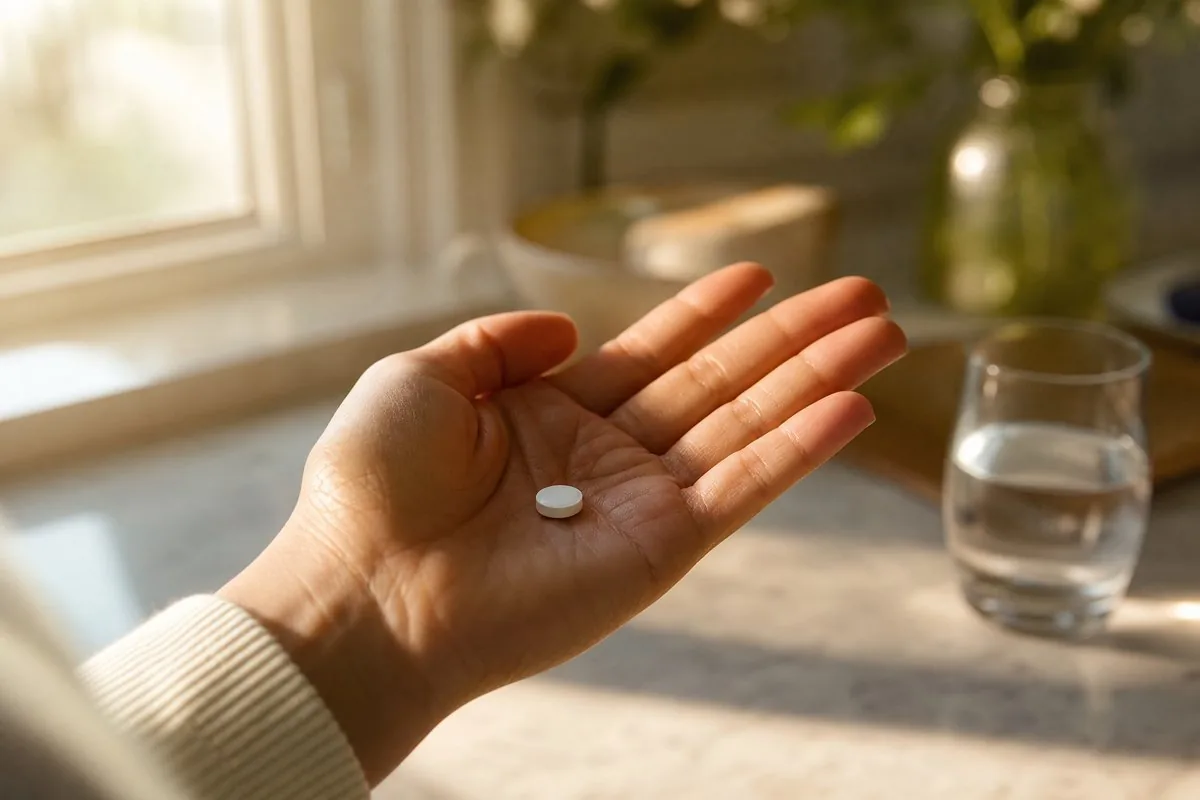
Water glass and tablet beside the bed the night before. Tablet first thing, before the phone. Shower during the waiting period. The routine should not require a decision at 6am.
Protect the waiting window
This is the part people erode. Coffee is the usual culprit, then breakfast a few minutes early. Set a timer if you need to; absorption depends on it more than anything else you control.
Travel and weekends
Time-zone changes and late nights are where daily dosing fails. Ask your clinician how they want you to handle travel before you go, and keep the tablet in hand luggage with its label.
Semaglutide acts on the GLP-1 receptor – the same signalling your gut uses after a meal.
What to do about missed doses
Do not double up and do not take it late with food. Ask your clinician or the pharmacy on your label what they want you to do, because it depends on your schedule.
Track adherence honestly for four weeks
A simple mark on a calendar. If you find you are shortening the wait most mornings, that is a route problem worth raising rather than a discipline failure to hide. See the 30-second film answers for this medication.
Why the tablet has strict rules and the injection does not
Semaglutide is a peptide, and peptides are digested. To make an oral tablet work at all, the formulation includes an absorption enhancer, SNAC, which raises local pH in the stomach and protects the molecule long enough for some of it to cross the gastric wall. That mechanism is fragile, and the dosing rules follow directly from it: take it on an empty stomach after waking, with no more than about 4 ounces of plain water, and wait at least 30 minutes before any food, drink, or other oral medication. Food or extra liquid dilutes the local environment and reduces absorption. According to FDA prescribing information for oral semaglutide, these conditions are part of the approved instructions rather than suggestions. Taking it on an empty stomach covers the practicalities.
FDA has warned about dosing errors reported with compounded GLP-1 products.
Tablet versus injection, honestly compared
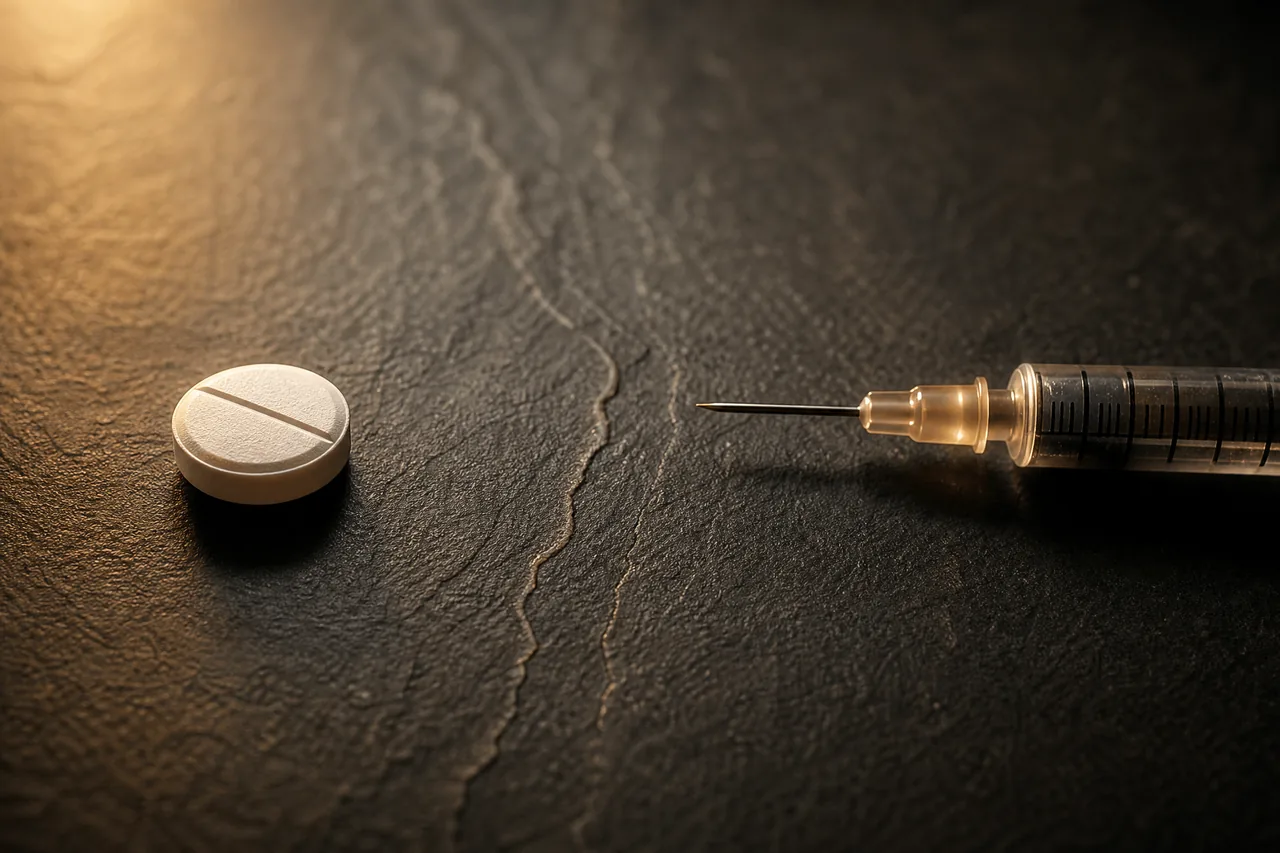
Both forms deliver semaglutide to the same GLP-1 receptor, so the mechanism is identical. What differs is route, dosing frequency, and how much of the dose reaches circulation. Oral bioavailability is low and variable, which is why oral doses in milligrams are not comparable to injectable doses in milligrams; comparing the numbers directly is a category error. Injectable semaglutide is once weekly with no food restrictions. The tablet is daily and conditional. Neither is universally superior: the right answer depends on whether needles are a barrier, whether a strict morning routine is realistic for you, and what your clinician judges appropriate. Oral versus injectable semaglutide works through the trade-off in more detail.
Building a routine that survives real life
The dosing conditions are the whole ballgame for an oral peptide, so the practical question is whether the routine holds on a bad morning. What tends to work: keep the tablet and a small glass of water at the bedside, take it the moment you wake, then start the 30-minute clock before coffee, breakfast, or other tablets. Anything that shifts your wake time drastically, such as shift work or travel across time zones, is worth raising with your clinician rather than solving alone. Missing the window matters more than missing the exact minute. A daily routine that works has the specifics, and the instructions supplied with your prescription govern over anything written here.
Answer a few questions. A licensed clinician decides what, if anything, is appropriate.
Frequently asked questions
Can I take it at night?
Follow your label. The instruction exists because a genuinely fasted stomach is required, which is hardest to guarantee in the evening.
Does one late dose ruin progress?
No, but a pattern undermines it. Report the pattern instead of adjusting the dose.
Does oral semaglutide work?
Oral semaglutide reaches the same GLP-1 receptor as the injectable form. Absorption is low and variable, which is why the dosing conditions are strict and why oral and injectable milligram doses are not comparable.
How do you take oral semaglutide?
On an empty stomach after waking, with no more than about 4 ounces of plain water, then wait at least 30 minutes before food, drink, or other oral medication.
Is oral semaglutide as effective as injections?
They act on the same receptor, but route and bioavailability differ, and no equivalence between specific oral and injectable doses should be assumed. Your clinician advises on what suits your situation.
How much does oral semaglutide cost?
Cash-pay pricing depends on the preparation and supply length. PinwellRx publishes flat cash pricing and does not accept insurance.
Pick the route that fits your mornings
A licensed clinician helps you choose honestly. Rx only.
Rx only. A licensed clinician decides whether treatment is appropriate and may determine that no treatment, or a different treatment, is right for you. Compounded medications are not FDA-approved and are not reviewed by FDA for safety, effectiveness, or quality before marketing. Individual results vary.
Sources
Clinical trials listed below evaluated FDA-approved products at the doses studied. They are cited as published science, not as evidence about any compounded preparation, which is not FDA-approved and has not been evaluated by FDA for safety, effectiveness, or quality.
- Peer-reviewedTriplitt C et al. Current understanding of SNAC as an absorption enhancer: the oral semaglutide experience. Clin Diabetes 2024;42(1):74-86
- FDAFDA Center for Drug Evaluation and Research, Clinical Pharmacology Review, oral semaglutide (NDA 213051)
- FDA databaseDrugs@FDA: search approved labeling for oral semaglutide
- Research databaseSearch the literature: PIONEER programme: oral semaglutide clinical trials
Spotted something inaccurate? Report an error – corrections are logged per our editorial standards.
More on Oral Semaglutide
Same medication, different question.

A daily routine only starts after a clinician writes the tablet. That explainer is oral semaglutide.