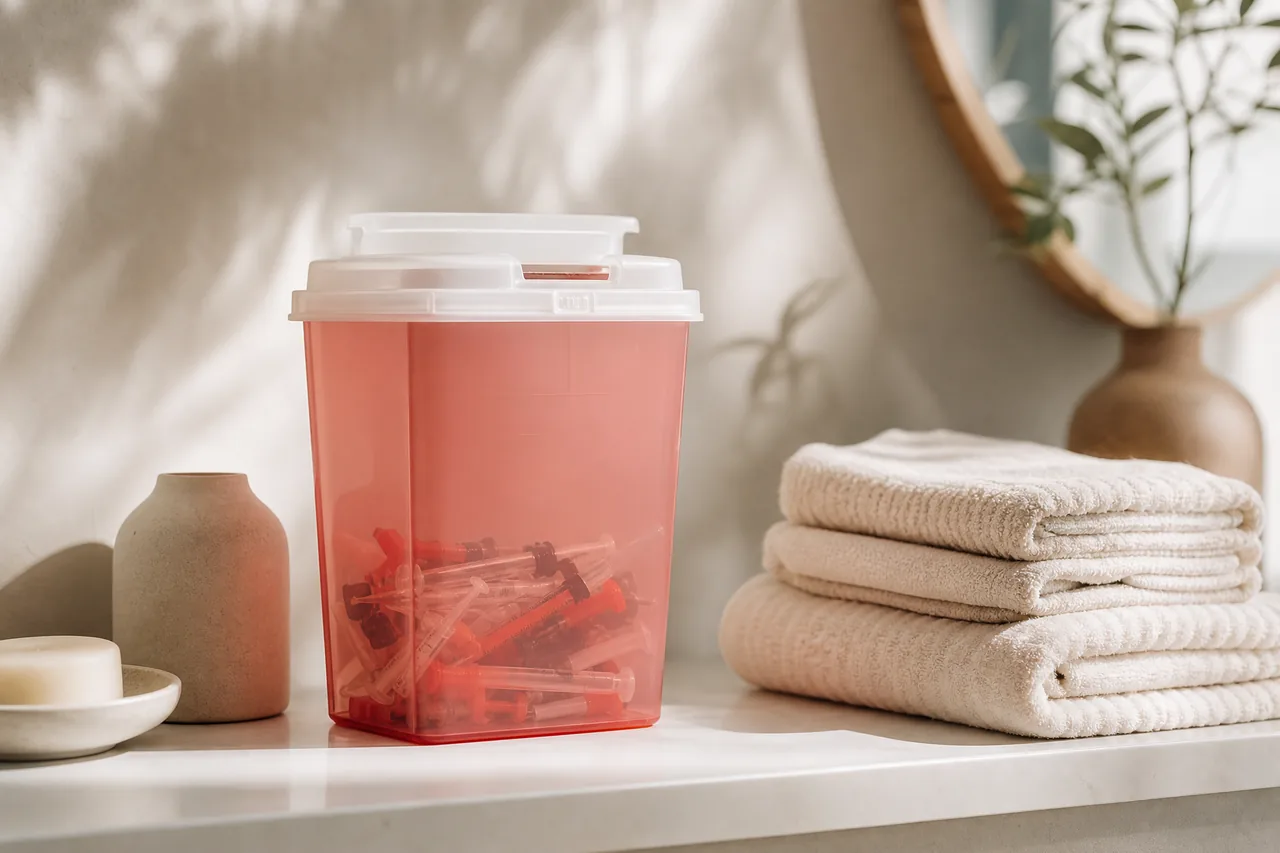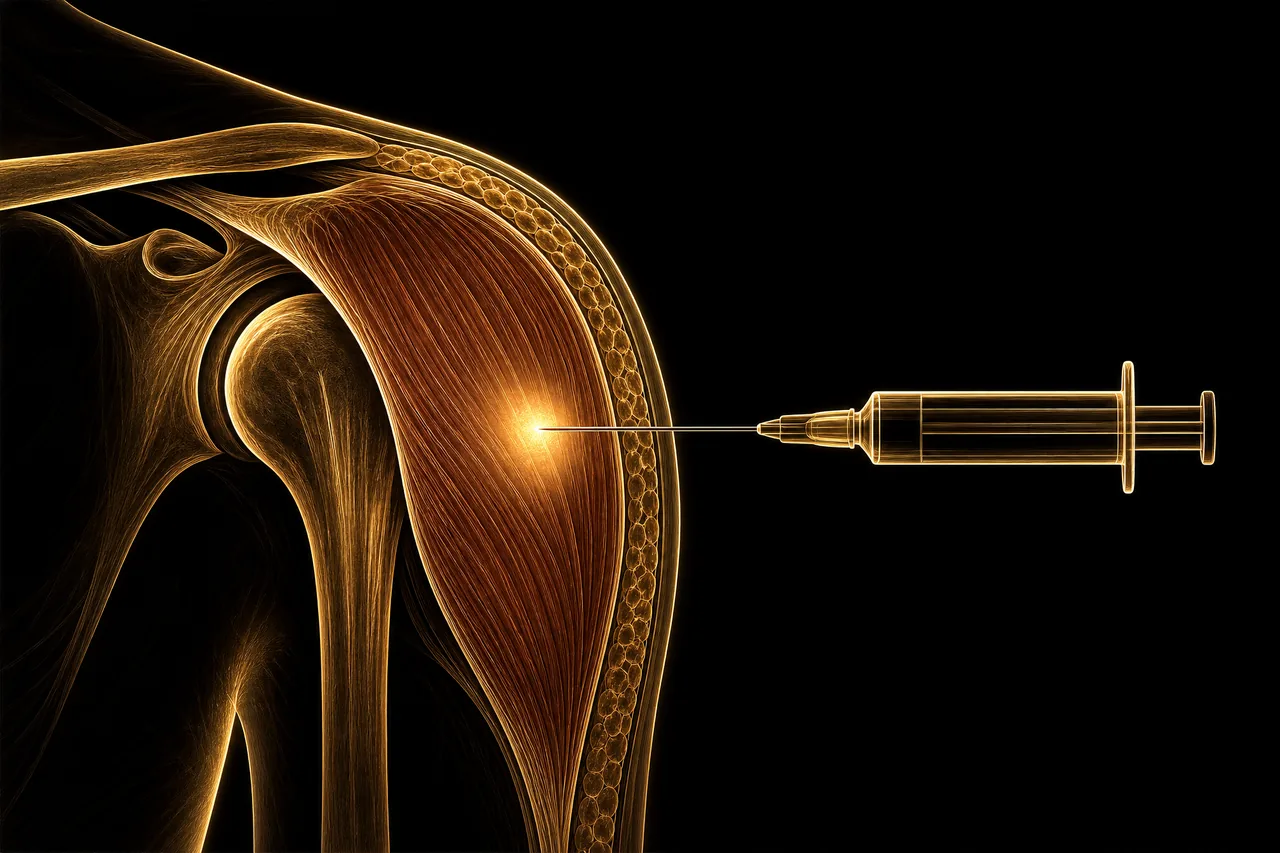
Route determines site and angle
Intramuscular usually means the deltoid or the outer thigh, needle at ninety degrees into muscle. Subcutaneous means the fat layer, often with a pinch. Your label specifies which, and they are not interchangeable.
Choosing between shoulder and thigh
The deltoid is convenient and quick, but has less muscle mass, so larger volumes suit the thigh better. If you are self-injecting, the thigh is easier to see and reach reliably.
Why rotation matters more with repeat dosing
B12 is often given on a recurring schedule for months. Using the same square inch each time reliably produces soreness and firm tissue. Alternate sides at minimum.
Vitamin B12 is required for red blood cell formation and for the myelin sheath around nerves.
Technique details that reduce soreness
Let alcohol dry. Insert in one smooth motion. Press steadily rather than fast. Afterwards, gentle movement of the limb beats sitting still, and press with dry cotton without rubbing.
What to watch for
Ordinary: brief tenderness, a pink dot. Not ordinary: spreading redness, warmth, growing swelling, drainage or fever, which need prompt clinical attention. See the 30-second film answers for this medication.
What B12 does, and what MIC adds
Vitamin B12 (cobalamin) is required for two enzymatic reactions in humans: the conversion of homocysteine to methionine, and the metabolism of methylmalonyl-CoA. Practically, that makes it essential for red blood cell formation and for maintaining the myelin sheath around nerves. Deficiency produces fatigue, macrocytic anaemia, and neurological signs including numbness and tingling. The MIC portion of a combination injection is methionine, inositol, and choline, three compounds the liver uses in fat metabolism, which is where the lipotropic description comes from. Evidence that MIC produces weight loss in humans is limited. B12, by contrast, has a clear and well-established role, and it matters most in people who are genuinely low, which is why B12 deficiency signs is the more useful starting point than dosing.
Why injection rather than a tablet
Oral B12 absorption depends on intrinsic factor, a protein produced in the stomach that binds B12 for uptake in the ileum. Anything that disrupts that pathway impairs absorption: pernicious anaemia, atrophic gastritis, gastric or ileal surgery, and long-term proton pump inhibitor or metformin use. Intramuscular or subcutaneous injection bypasses the entire mechanism and delivers B12 directly. For someone absorbing normally, high-dose oral B12 can be adequate; for someone who is not, it may not be. That is the actual clinical question, and it is why a clinician may want to know your history and, in some cases, order labs. Where to get B12 injections and how to give one cover the practical side.
Safety, and the reason people feel worse briefly
B12 is water-soluble and excess is generally excreted in urine, which is why it has no established upper intake limit and why toxicity is not the usual concern. The more common reports are injection-site soreness and, occasionally, feeling briefly worse after the first dose. One proposed explanation is that rapid correction of a deficiency increases red blood cell production, which can transiently lower potassium; another is simple site reaction. Feeling worse after a B12 injection covers what is described and what is speculation. Anything severe, or an allergic reaction, is a reason to contact a clinician. Compounded preparations are not FDA-approved and FDA does not review them for safety, effectiveness, or quality before marketing.
Ten minutes now, and a licensed clinician tells you where you actually stand.
Frequently asked questions
Is subcutaneous less effective for B12?
Both routes are used clinically. Your clinician chooses based on your prescription and circumstances, and your label states it.
Can I use my abdomen for an intramuscular dose?
No. Intramuscular sites are specific muscles. If your label says intramuscular, use the site your clinician specified.
Where can I get B12 injections?
B12 injections require a prescription in most cases and are dispensed by a licensed pharmacy. A clinician reviews whether injection rather than oral supplementation is appropriate for you, which depends on your absorption and history.
How do you give a B12 injection?
Follow the instructions supplied with your preparation. B12 is given intramuscularly or subcutaneously depending on the product. Supplies and written instructions arrive with the shipment.
What do B12 injections do?
B12 is required for red blood cell formation and for maintaining the myelin sheath around nerves. Injections bypass the intrinsic-factor pathway needed for oral absorption, which matters most in people who are genuinely deficient.
How long do B12 injections last?
Duration depends on the dose, your baseline status, and why you are deficient. Your clinician sets the interval and may recheck levels.
Get a route, a site and a schedule that are yours
A licensed clinician prescribes and the pharmacy labels it. Rx only.
Rx only. A licensed clinician decides whether treatment is appropriate and may determine that no treatment, or a different treatment, is right for you. Compounded medications are not FDA-approved and are not reviewed by FDA for safety, effectiveness, or quality before marketing. Individual results vary.
Sources
Clinical trials listed below evaluated FDA-approved products at the doses studied. They are cited as published science, not as evidence about any compounded preparation, which is not FDA-approved and has not been evaluated by FDA for safety, effectiveness, or quality.
- NIHNIH Office of Dietary Supplements: Vitamin B12, Fact Sheet for Health Professionals
- Government healthCDC: Injection safety, safe injection practices
- NIHMedlinePlus: Vitamin B12 deficiency anemia
- FDA guidanceFDA: Compounding and the FD&C Act, Section 503A
Spotted something inaccurate? Report an error – corrections are logged per our editorial standards.
More on Metabolism Boost (B12 + MIC)
Same medication, different question.