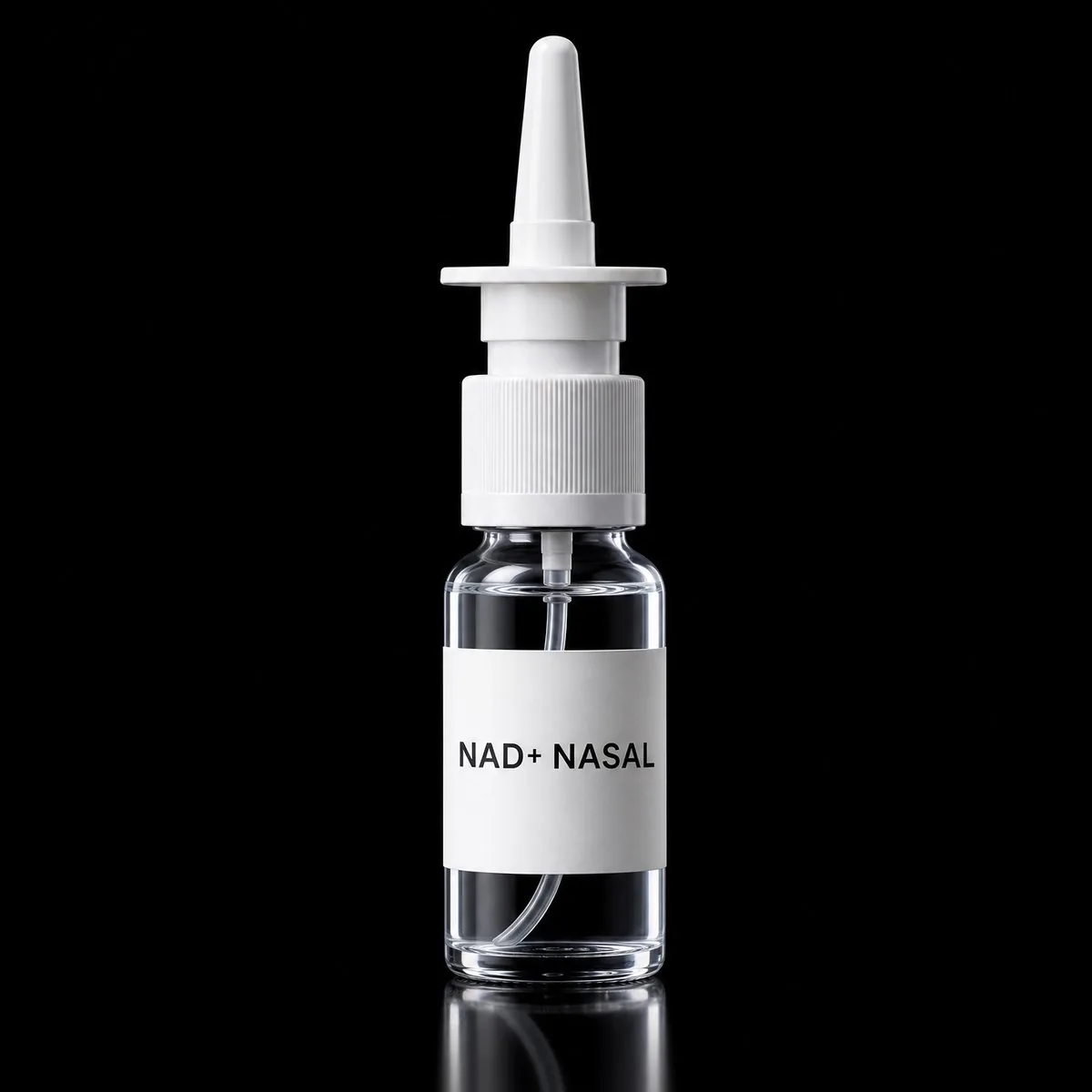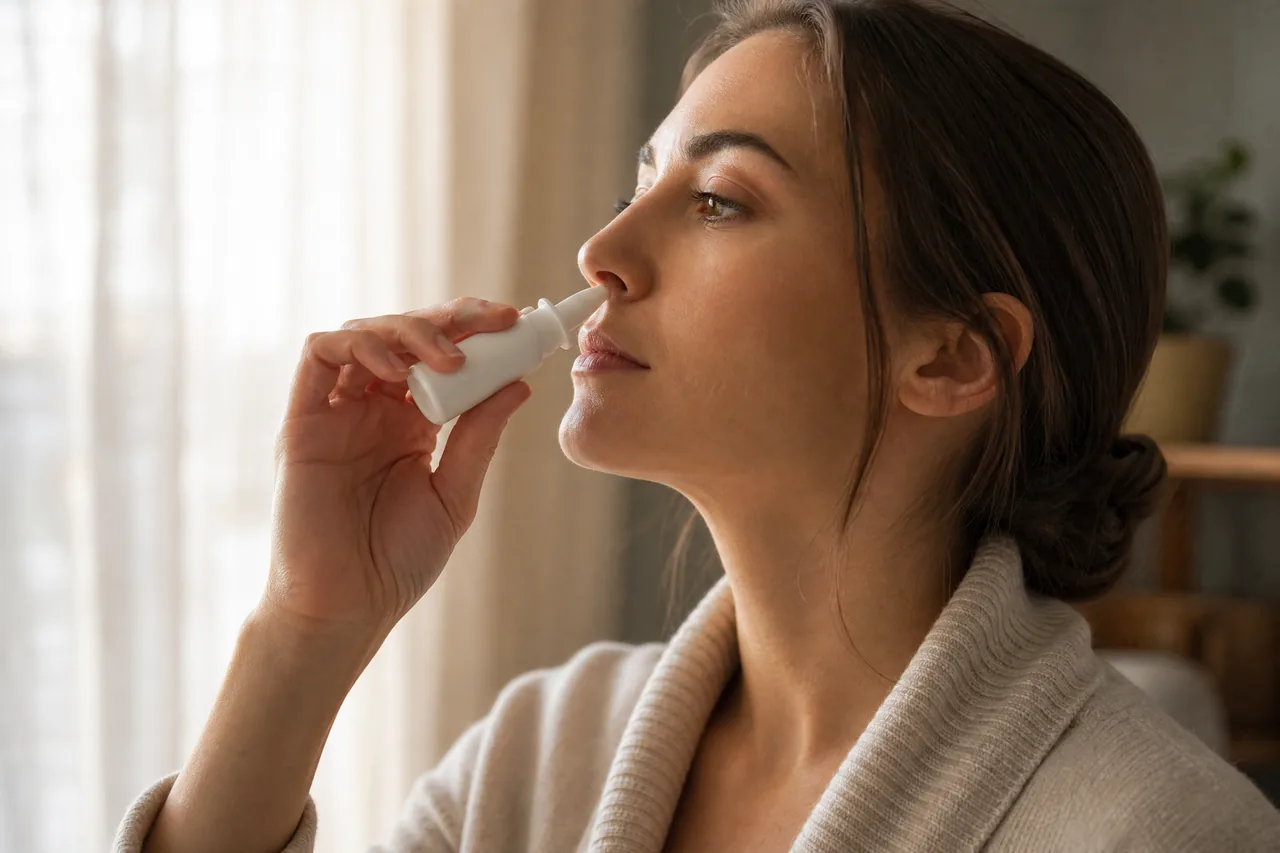
Why the anatomy works
The respiratory mucosa of the nasal cavity is thin and richly vascular. Molecules crossing it enter circulation directly rather than travelling through the gut and liver first. Intranasal delivery is used clinically across several drug classes for exactly this reason.
What bypassing the liver means
Oral drugs pass through the liver before reaching the rest of the body, where a share is metabolised immediately. Intranasal delivery avoids that step, which is why some molecules are viable nasally and not orally.
The limitation nobody advertises
Surface area is small and the dose that can be delivered per spray is limited. Congestion, technique, head position and how much runs down the throat all change what is absorbed. Variability is the honest headline.
NAD+ is a coenzyme required by every cell to convert nutrients into usable energy.
Why doses cannot be converted
Because absorbed fraction differs and varies, a nasal dose is not a smaller version of an injected dose. Your clinician sets each route independently.
What this means for expectations
Nasal delivery is a real route with real pharmacology and real limits. It changes convenience, not the strength of the underlying evidence for the molecule. See the 30-second film answers for this medication.
What actually happens in a telehealth evaluation
A legitimate telehealth pathway has a defined sequence, and knowing it is the easiest way to spot one that does not. You complete an intake covering medical history, current medications, allergies, and relevant measurements. A clinician licensed in your state reviews it. They may ask follow-up questions, request labs, or decline. If they judge treatment appropriate, they write a prescription, and a licensed pharmacy dispenses and ships it. The parts that matter are that a real licensed clinician makes the decision, that declining is a genuine possible outcome, and that no payment obligates a prescription. What happens in an online visit walks through it, and questions to ask your clinician lists what to bring.
Compounded medications are not FDA-approved.
How to tell a legitimate pharmacy from a grey-market seller
The reliable signals are structural rather than cosmetic. A legitimate operation requires a medical evaluation before prescribing, names the dispensing pharmacy and its state licensure, provides a way to reach a clinician after you start, and states plainly that compounded medications are not FDA-approved. The warning signs are equally consistent: no intake or a token questionnaire nobody reviews, no named pharmacy, prescription medication sold without a prescription, research-use-only or not-for-human-use labelling, claims of guaranteed results, and pressure tactics around expiring discounts. FDA has warned specifically about unapproved GLP-1 products sold online. Red flags when buying online expands the checklist, and choosing a telehealth programme covers what to compare.
What cash-pay pricing means in practice
Cash-pay means the price is the price: no insurance adjudication, no formulary, no prior authorisation, and no explanation of benefits arriving weeks later. PinwellRx does not accept insurance. The trade-off is real in both directions. You lose any possibility of reimbursement, and compounded preparations are generally not covered anyway. You gain a predictable number and no coverage gatekeeping. When comparing providers, normalise for supply length, whether the clinician visit and follow-ups are included, and whether shipping and injection supplies are extra. Insurance and compounded medications explains the coverage picture, and the cheapest route without insurance compares approaches without promising a result.
No card needed to see it. No insurance accepted or required.
Frequently asked questions
Does nasal delivery reach the brain directly?
Some nose-to-brain transport has been studied for certain molecules, but it should not be assumed or claimed for a compounded preparation.
Does a blocked nose stop absorption?
It can reduce it. Mention persistent congestion to your clinician rather than adding sprays.
Can I get a GLP-1 online?
Yes, through a telehealth pathway where a clinician licensed in your state reviews an intake and decides whether treatment is appropriate. A prescription is never guaranteed, and a clinician can decline.
What does a GLP-1 cost without insurance?
Cash-pay pricing varies by preparation, supply length, and what the quoted price includes. Compare on a normalised basis: supply length, whether visits are included, and whether shipping and supplies are extra.
Does insurance cover compounded medications?
Compounded preparations are generally not covered by insurance. PinwellRx does not accept insurance and publishes flat cash pricing.
How do I choose a telehealth provider safely?
Look for a required medical evaluation, a named and state-licensed dispensing pharmacy, access to a clinician after you start, and plain statements that compounded medications are not FDA-approved.
Ask whether the nasal route suits you
A licensed clinician decides the route. Rx only.
Rx only. A licensed clinician decides whether treatment is appropriate and may determine that no treatment, or a different treatment, is right for you. Compounded medications are not FDA-approved and are not reviewed by FDA for safety, effectiveness, or quality before marketing. Individual results vary.
Sources
Clinical trials listed below evaluated FDA-approved products at the doses studied. They are cited as published science, not as evidence about any compounded preparation, which is not FDA-approved and has not been evaluated by FDA for safety, effectiveness, or quality.
- ReferenceCleveland Clinic: NAD (nicotinamide adenine dinucleotide)
- Peer-reviewedCovarrubias AJ et al. NAD+ metabolism and its roles in cellular processes during ageing. Nat Rev Mol Cell Biol 2021;22:119-141
- FDA guidanceFDA: Compounding and the FD&C Act, Section 503A
- FDA guidanceFDA: BeSafeRx, buying medicine online safely
Spotted something inaccurate? Report an error – corrections are logged per our editorial standards.
More on NAD+ Nasal Spray
Same medication, different question.