What NAD+ does in a cell
NAD+ is a coenzyme that carries electrons in the reactions cells use to turn food into usable energy. It is also consumed by repair-related enzymes. Levels fall measurably with age – which is the observation the whole category is built on.
The digestion problem
Swallowed unprotected, much of an NAD+ dose is broken down before it reaches circulation. That is the practical reason injections and nasal sprays exist at all.
What liposomal delivery is for
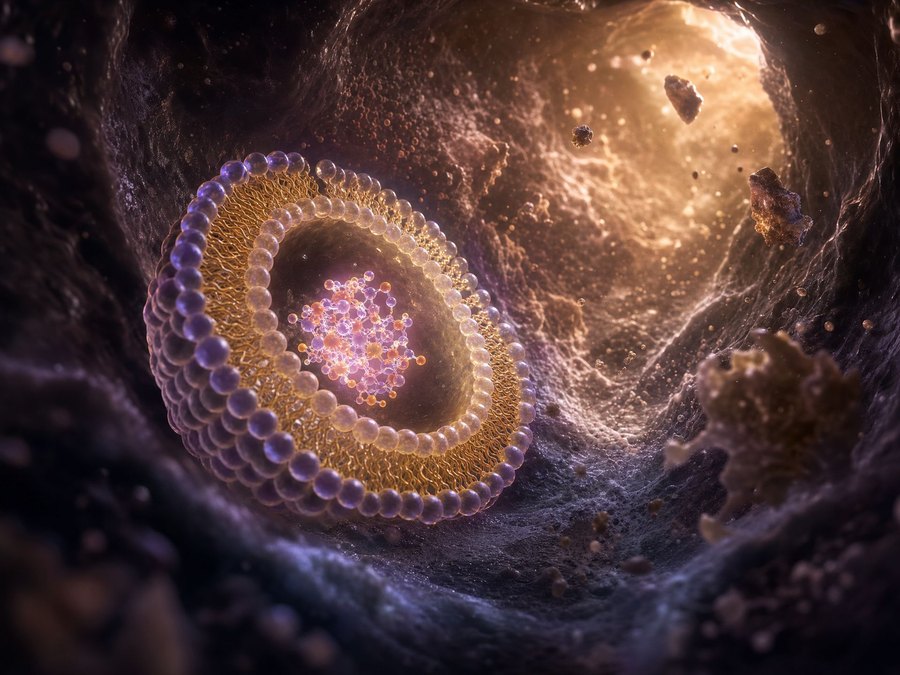
A liposome is a lipid bubble around the molecule. The intent is to shield it through the gut so more arrives intact. This is a delivery strategy, not a claim that a particular amount reaches your cells – human data on absorption for compounded liposomal preparations is limited.
NAD+ is a coenzyme required by every cell to convert nutrients into usable energy.
How it compares with the other routes
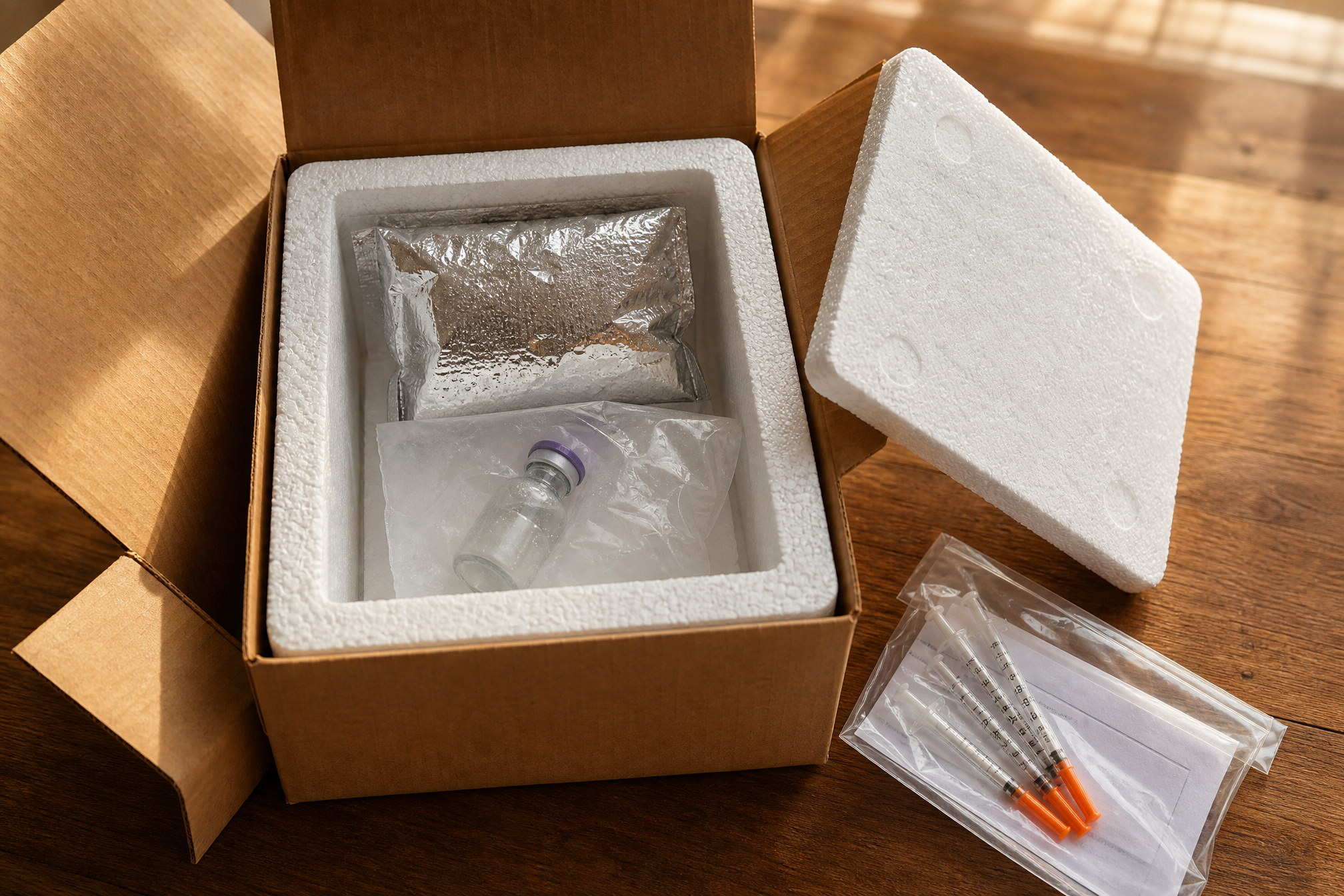
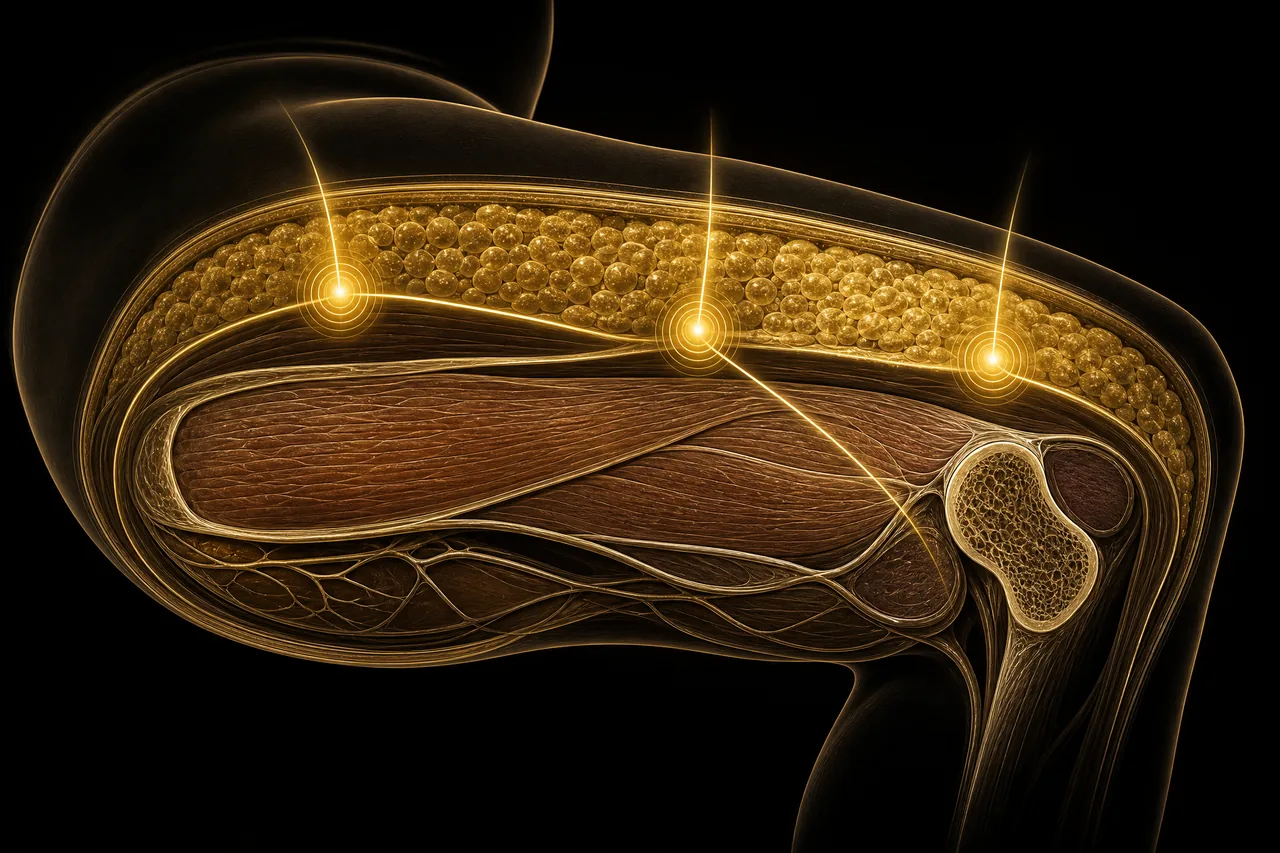
The injection bypasses digestion entirely. The nasal spray uses the nasal lining as a shortcut. Liposomal is the needle-free daily option. Which suits you – if any – is a clinician decision, not a preference to select.
What is honestly unknown
No outcome is promised. NAD+ is not FDA-approved for any indication, and the evidence base for compounded preparations is thin. Anyone promising an energy result is going past what is known.
Price and process
Liposomal NAD+ is $229 per 4 weeks here, cash pay. You see the price before you pay, a clinician can decline, and you are refunded in full if nothing is prescribed. See the 30-second film answers for this medication.
Compounded medications are not FDA-approved.
What NAD+ actually does inside a cell
NAD+ (nicotinamide adenine dinucleotide) is a coenzyme present in every cell you have. Its job is electron transfer: it accepts electrons during the breakdown of food and carries them to the mitochondria, where that energy is converted into ATP. It is also a required substrate for sirtuins and PARP enzymes, which participate in DNA repair and in regulating gene expression. Tissue NAD+ levels decline with age in human and animal studies, and that observation is what motivated interest in supplementation. What has not been established is that raising measured NAD+ produces any specific clinical outcome in humans. That gap between mechanism and outcome is the honest state of the field, and it is why do NAD+ injections work is written as a discussion of evidence quality rather than a promise.
Why the route of administration matters so much here
NAD+ is a large, charged molecule, and that single fact explains most of the product landscape. Taken orally as NAD+ itself, the majority is broken down in the gut before absorption, which is why oral products usually supply precursors such as NMN or NR instead, or wrap the molecule in a lipid carrier. Injection bypasses digestion entirely and delivers the molecule to circulation, which is why it is the most direct route. Intranasal preparations use the thin, richly vascular nasal lining as a middle path with no needle. Nasal versus injection and NAD+ versus NMN versus NR compare these directly. Bioavailability data for compounded preparations specifically is limited, and no route has been shown to be clinically superior for a particular outcome.
The flush, and why it happens
Many people report a warm, flushed, occasionally prickly sensation during or shortly after NAD+ administration, sometimes with a feeling of chest pressure or a need to slow the infusion. This is a recognised and generally transient effect associated with rate of delivery: slower administration is commonly reported to reduce it. It is not evidence that the preparation is working, and it is not evidence that something is wrong. What it does mean is that administration instructions from your dispensing pharmacy matter, particularly the rate. Anything beyond a brief flush, and specifically chest pain, difficulty breathing, or a reaction that does not settle, is a reason to stop and contact a clinician. Compounded NAD+ preparations are not FDA-approved and FDA does not review them for safety, effectiveness, or quality before marketing.
Frequency, dosing, and who decides
There is no FDA-approved dosing schedule for compounded NAD+, because there is no FDA-approved NAD+ drug product for these uses. Schedules in practice are set by the prescribing clinician and the dispensing pharmacy, and they vary. What that means practically is that a schedule you read about online is someone else’s prescription, not a benchmark for yours. Ask your clinician what schedule they are prescribing and why, what they would consider a reason to change it, and how long they intend to continue before reassessing. Follow the instructions supplied with your specific preparation. How often NAD+ injections are given goes into the range you will see described and why the range is wide rather than settled.
Your intake goes to a licensed clinician, not an algorithm.
Frequently asked questions
Is liposomal NAD+ FDA-approved?
No. NAD+ is not an FDA-approved drug, and compounded preparations are not reviewed by FDA for safety, effectiveness, or quality before marketing.
Is it better than the injection?
Different, not better. The injection bypasses digestion; the liposomal route is needle-free. Neither is promised to produce a specific result.
NAD+ vs NMN vs NR?
All three relate to the same pathway. NMN and NR are precursors your body converts; NAD+ is the coenzyme itself.
Do I need a prescription?
Compounded liposomal NAD+ requires a prescription following clinician evaluation.
Do NAD+ injections work?
NAD+ has a well-characterised role in cellular energy metabolism and DNA repair, and tissue levels decline with age. What has not been established is that raising NAD+ produces a specific clinical outcome in humans. Compounded preparations are not FDA-approved.
Are NAD+ injections safe?
Short-term tolerability is generally described as acceptable, with flushing and injection-site reactions most commonly reported. Long-term safety data in healthy adults is limited, and compounded preparations are not evaluated by FDA before marketing. A clinician decides whether it is appropriate for you.
Ask a clinician whether NAD+ fits
A licensed clinician reviews your history and decides what is appropriate. Rx only.
Rx only. A licensed clinician decides whether treatment is appropriate and may determine that no treatment, or a different treatment, is right for you. Compounded medications are not FDA-approved and are not reviewed by FDA for safety, effectiveness, or quality before marketing. Individual results vary.
Sources
Clinical trials listed below evaluated FDA-approved products at the doses studied. They are cited as published science, not as evidence about any compounded preparation, which is not FDA-approved and has not been evaluated by FDA for safety, effectiveness, or quality.
- FDAFDA. Compounding and the FDA: questions and answers
- NIHNIH National Center for Complementary and Integrative Health. Dietary supplements and NAD precursors
- NIHNIH Office of Dietary Supplements: Niacin (NAD+ precursors)
- Research databaseSearch the literature: NAD+ metabolism and ageing research
Spotted something inaccurate? Report an error – corrections are logged per our editorial standards.
Keep reading
Other medications we write about.